Articles written by Blake Lambert
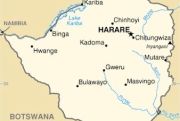
With food, water, electricity and public services all scarce, Zimbabwe confirms Hobbes' belief in the harshness of existence. President
Robert Mugabe, the country's sole leader since independence in 1980,
deserves much of the blame. He has clung to power no matter what the national cost. Still, it is unclear
how to remove Mugabe from the picture so that Zimbabwe might begin its reconstruction.
more
TORONTO -- Canada arguably exists as a luxury parking garage for
human souls. It offers the comforts of freedom and prosperity to many
of its citizens without excessive complications. There is never war,
only inconsistent political crises erupting out of a federal state
spread across six time zones. It is no surprise that
Canada's constitutional mantra calls for "peace, order and good
government." Unfortunately, national politics this century
renders that mantra as myth. In reality, the country is now one of the least
stable members of the G-8. more
TORONTO -- Major media organizations operate as devout, if
secular, institutions. Think of churches, mosques and temples, stripped
of their religious content. What remains is the faith,
however, both in the mission of journalism and the audience's ability
to appreciate it. This belief system is often accompanied by heavy
doses of public sanctimony. Perhaps nowhere is that more evident than in the approach of these
organizations when confronted with the abduction of their own
correspondents.
more
The
West and its development industry have serially backed a series of
African leaders as exemplars for the continent, only to see them come
to resemble the autocrats they previously opposed. Yet neither the
diplomats nor the donors can refrain from anointing new visionaries.
The current favorite is Rwandan President Paul Kagame, admired for his
prudent political and economic management after the 1994 genocide. Count Stephen Kinzer, the author and former New York Times correspondent, among Kagame's believers. more
Celebration of Eritrean independence is a
contradictory exercise. One of Africa's newest countries, the anniversary is a reminder of its prolonged
struggle for statehood. But the struggle did not end with
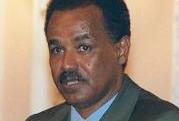
independence 17 years ago. Most Eritrean exiles blame President Issaias Afeworki,
the sole post-colonial leader, for their country's current problems.
Once viewed as a liberator for leading his forces to victory over
Ethiopia, he now presides over a single-party state, which outlaws even
the mildest dissent. more
Northern Ugandans are hoping the rebel Lord's Resistance Army
will soon sign a peace agreement with President Yoweri Museveni's
government. Their hope is understandable. The LRA's 21-year insurgency
and the Ugandan government's response have largely destroyed the region
north of the Nile and south of Sudan. But resolving the conflict
largely hinges on the enigmatic chairman of the LRA, Joseph Kony. A fine new book helps to demystify Kony, the LRA and the conflict which may or may not end soon.
more
Common sense suggests that when a house is burning down, the
owners do not charge the firefighters an exorbitant fee to enter. Yet that scenario more
or less captures the reprehensible attitude of the Zimbabwe government
toward the media in advance of today's (March 29) presidential and
legislative elections. The Information Ministry has charged reporters
at least $1,700 to cover the polls, according to the Foreign
Correspondents Association of Southern Africa. more
HALIFAX, Nova Scotia -- The portrayals of Africa in a spate of recent popular Western movies perpetuate damaging myths about the continent. The
flaws in representation are twofold, though connected. The first
relates to authenticity. In movies set in Africa, there is often a
sharp disconnect between what is portrayed on the screen and reality.
The second involves the persistent stereotype of sub-Saharan Africa as
a continent of exoticism and primal violence -- a world utterly unlike
the West. more
More than a year ago, the Organization of Petroleum Exporting
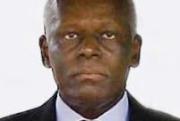
Countries (OPEC) officially welcomed its newest and 12th member, Angola. The move was undoubtedly prompted by the size of the country's oil reserves, the fourth-largest in Africa. But despite the sizable oil wealth that the country has already generated, and the promise of more to come in the wake of OPEC accession, experts on the country say government corruption and mismanagement means most Angolans are not benefiting.
more
The collapse of Sudan's national unity government caught Sara Anihiri, 24, completely off guard. Whenthe Halifax, Nova Scotia, resident and graduatestudent learned of the departure from the Sudanese government ofcabinet members from the ex-rebel Sudan People's Liberation Movement,she, like others in the Sudanese diaspora, feared the worst. "Are people going to go again to war?" For Anihiri, the conflict is personal: She was born to a mother from the south and a father from the north. more
HALIFAX, Nova Scotia -- Lust for oil can overpower a country's
democratic ideals and common sense, and the United States is not immune. Consider
Secretary of State Condoleeza Rice's rhetorical embrace of Equatorial
Guinea's president, Teodoro Obiang Nguema, in April 2006. Two
years earlier, a Senate panel had disclosed how Rice's "good friend" and his family held
multimillion dollar accounts, gleaned from government revenue, in Riggs
Bank. A new book examines the corrupting influence of oil money.
more
ACCRA, Ghana -- Henry Kobby, 22, opened his family's store here, which sells drinks and food, 18 months ago. But what seemed like a viable business idea in early 2006 is now undermined by power shortages that occur at least 24 hours of every three days. When the power goes, so does the refrigerator Kobby needs to keep the drinks cold and the microwave he uses to warm up the pies and pastries. The power shortages are a problem in many sub-Saharan African states that depend on hydroelectric power.
more
ABIDJAN, Ivory Coast -- As he watched children and teenagers play
soccer in the courtyard of apartment buildings with faded facades,
Moussa Damiba recalled better days here. Lots
of white people lived in these buildings before the crisis, the
32-year-old said. "The crisis" is the catch-all term used to describe
the years of instability, defined by a coup d'etat, a country-dividing
civil war and political violence. But Damiba
worries about the future too after last month's attempted assassination
of rebel leader Guillaume Soro. more
Our man in Abidjan looks and waits, and waits some more, for Charles Blé Goudé, leader of Ivory Coast's pro-government Young Patriots.
more
ABIDJAN, Ivory Coast -- Not long ago, the thought of President
Laurent Gbagbo and rebel New Forces leader Guillaume Soro serving in
the same government seemed absurd. In 2002, Soro's rebels attempted to overthrow Gbagbo's regime. A civil war then erupted in what was once West Africa's most stable and prosperous country. The inconclusive war resulted in a partition of the country. Yet today Gbagbo and Soro, the interim prime minister since
April, are partners in government and peace as they try to reunite
their divided country. more
ACCRA, Ghana -- Africa's worst currency, Ghana's cedi, gets a redenominated facelift, delighting some, confusing others.
more
ACCRA, Ghana -- When London-based Tullow Oil announced last month
that it had discovered oil off this country's west coast, a few
Ghanaians thanked God for the blessing. President John Kufuor reveled in the prospect that Ghana's
precious new resource would fuel faster
growth and create more jobs. Even
government critics considered the find of up to 600 million barrels to be a positive development. Despite their enthusiasm, however, Ghanaians understand how oil can curse an African country. more
A new book on African development aid is creating waves and prompting commentary across the print media landscape.
more
TORONTO -- Credit the apostle of development aid, Bono, for his unbending consistency. In
Heiligendamm, Germany, last week, he
accused the G-8 countries of obfuscation and creative accounting in
their $60 billion pledge to fight HIV/AIDS, malaria and tuberculosis. While the disconnect between the G-8's words and
deeds is wrong and worthy of condemnation, so too is the U2 frontman's
failure to publicly demand accountability from the sub-Saharan African
governments whom he yearns to help.
more
OUAGADOUGOU, Burkina Faso -- The murderers of Norbert Zongo,
editor of the weekly L'Indépendant, demonstrated particular cruelty in
December 1998 when they shot up his body, and those of three
companions, and then burned it. But they failed to eliminate memories of his journalism and the effect it had on people here. "We
consider Mr. Norbert Zongo as our defender because he used to depict
the government's wrongs," said Mandé Ousséni, an English teacher who
was a student in 1998. more