About Get Newsletters Login
February 09, 2012
Browse by Regions and/or Topics

Authors

Arif Rafiq

Arif Rafiq is president of Vizier Consulting, LLC, which provides strategic guidance on Middle East and South Asian political and security issues. He writes at the Pakistan Policy Blog. Previously, he worked for the Saban Center for Middle East Policy at the Brookings Institution and public relations firms Ruder Finn and Burson-Marsteller. His commentary has been published in the Baltimore Sun, Christian Science Monitor, Miami Herald and other outlets. Rafiq has been quoted by the Associated Press, Los Angeles Times, New York Times, and a number of international publications. He has appeared on Al Jazeera English, BBC Radio, the John Batchelor Show, and PBS’s WorldFocus.

Articles written by Arif Rafiq

Attacks on Afghan Shiites Highlight Pakistan's Policy Failure

By Arif Rafiq 12 Dec 2011 | Briefing

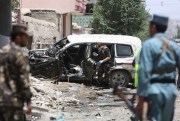
Last Tuesday’s deadly attacks on Shiites in Afghanistan are further evidence of dangerous instability in Pakistan and Islamabad’s failure to act coherently to counteract it. The increasingly messy jihadist landscape in Pakistan’s FATA is the result of the ISI's strategy of divide and rule, whose outcome tends to be more deadly violence and the emergence of increasingly nihilistic groups.

Victory for Civil Law in Pakistan a First Step

By Arif Rafiq 18 Mar 2009 | World Politics Review

A movement led by black-coated lawyers achieved a defining victory for the rule of civil law in Pakistan on Monday with the restoration of illegally deposed Supreme Court Chief Justice Iftikhar Muhammad Chaudhry. This highly popular movement provides an opportunity to strengthen the Pakistani state, improve the judicial system's responsiveness, and resist creeping Talibanization.

Pakistan's Search for Security

By Arif Rafiq 01 Dec 2008 | World Politics Review

The attacks in Mumbai raised once again the specter of an Indo-Pak war. Yet, earlier on the same day the attacks began, Pakistan's Foreign Minister Shah Mehmood Qureshi arrived in New Delhi to continue recently renewed peace talks with his Indian counterpart. The two South Asian states, playing to a script performed before, had in a short period of time taken two steps forward and 10 steps back.