Alex Thurston
Alex Thurston is a Ph.D. student at Northwestern University, where he studies Islam and politics in Africa. He writes at Sahel Blog.
A series of recent crises in Mali and Guinea Bissau have put the Economic Community of West African States in the spotlight, demonstrating the organization’s potential to shape West African politics, but also the limitations on its ability to do so. Through political pressure and threats of military efforts, ECOWAS is attempting to push West African coups beyond the boundaries of political acceptability. more
Since returning to civilian rule in April 2011, Niger has achieved a measure of political stability. But though recent successes are encouraging, Niger’s progress is increasingly threatened by regional crises originating from neighboring states that include political discontent among Tuaregs, violence and refugee flows. The combined effects of these crises threaten to make life in Niger even harder. more
This week, a general strike has paralyzed much of Nigeria’s economy while anti-government protests have occurred across the country. The protests were triggered by the government’s decision to remove a subsidy on fuel on Jan. 1. But they also encompass broader concerns that speak to a widespread lack of faith in President Goodluck Jonathan's ability to meet Nigeria’s challenges. more
On Sept. 23, Zambia announced that opposition leader Michael Sata had won the country's presidential election. Sata's victory is notable for two reasons. First, African incumbents like outgoing President Rupiah Banda seldom lose elections. Second, Sata's anti-China rhetoric has made Beijing nervous about whether Zambia will now spearhead an African backlash against Chinese economic activities on the continent.
moreIn Senegal, popular anger over chronic electricity shortages and the autocratic behavior of President Abdoulaye Wade have produced several waves of protest since last summer. The same anger flared again on June 23, when protesters took to the streets to denounce Wade's plans to amend the constitution and lower the threshold necessary to win in the first round of next February's presidential election. more
While Chad and the Central African Republic are dismantling rebel groups and moving toward greater stability, Sudan and the Democratic Republic of the Congo (DRC) are continuing on a violent path. Internal rebellions within south Sudan in the run-up to its independence are complicated by ongoing tensions with north Sudan. Meanwhile, electoral tensions in the DRC are accompanied by ongoing military conflict. more
On June 12, the government of the Central African Republic (CAR) and the country's last major rebel force signed a peace agreement. The following day, Chad reached a peace deal with a CAR-based Chadian rebel group, capping a year of deals and arrests that progressively weakened Chad's armed insurgencies. For Chad and the CAR, peace and stability seem closer in 2011 than in 2008, when rebels terrorized both countries. more
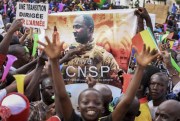
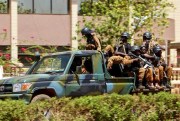
Since February, Burkina Faso has been shaken by major protests led by
students, merchants and members of the country's security forces.
President Blaise Compaoré has responded with a combination of government
reshuffles, outreach to aggrieved factions and repression. Yet unrest
has increased, with a large crowd gathering in the capital Ouagadougou
on Saturday to demand Compaoré's departure.
more