Articles written by Neeta Lal
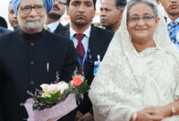
Indian Prime Minister Manmohan Singh's recent two-day state visit to Bangladesh has been pathbreaking in more ways than one. Until recently, the two neighbors viewed each other with suspicion, preventing the two sides from fully leveraging the benefits of mutual cooperation. But bilateral ties have been on an upswing since the traditionally pro-Indian Awami League party swept to power in 2009 polls. more
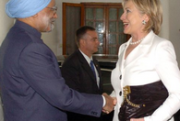
U.S. Secretary of State Hillary Clinton was in India yesterday for the second strategic dialogue between the two countries. Though there was nothing to rival the excitement surrounding the 2008 Indo-U.S. nuclear deal or U.S. President Barack Obama's November 2010 visit, media interest was kept alive by the signing of two big-ticket deals and a free airing of differences on a raft of issues. more
Against the backdrop of a sputtering economy and a spate of scandals
battering India's global image, Finance Minister Pranab Mukherjee is in Washington today. The visit -- touted as a damage-control and public relations
initiative -- will see the senior minister meet U.S. Treasury Secretary
Timothy Geithner and industry leaders to reinforce the message
that India
remains an attractive investment destination. more
With globalization increasingly shifting the international distribution of economic power in Asia's favor, India has been forced to alter its engagement with Africa from one of simple political solidarity to a larger vision of economic and strategic partnership. As
a result, India is now wooing Africa with financial aid and the
prospect of sizeable future investment to strengthen the two sides'
commercial ties.
more
Pakistan's alleged role in shielding Osama bin Laden has driven calls to modify India's outreach initiative toward its South Asian neighbor. It has also resurrected the question dogging Indian policymakers since the 2008 Mumbai massacre: Should India continue to engage with Pakistan even though Islamabad cultivates terrorist groups as a strategic option and harbors some that target India itself?
more
The signals emanating from the mini-summit between Indian Prime Minister
Manmohan Singh and Chinese President Hu Jintao, held on the sidelines
of the recently concluded BRICS conference in Hainan, China, were
largely positive. The leaders of the two Asian neighbors both showed an interest in arresting the downward slide in bilateral relations that had lately touched a low. more
NEW DELHI -- The recent passage of India's Civil Liability for Nuclear Damages bill marks the country's return to the international nuclear market. But in its
final form, the law has left few on either side of the debate
entirely satisfied. While the bill's passage is seen as a personal victory for Prime Minister Manmohan Singh, critics still accused Singh of
hustling the legislation through parliament in order to serve U.S. interests. more
NEW DELHI -- Indian External Affairs Minister S.M. Krishna's
visit to Pakistan last week to move the bilateral Composite Dialogue
forward will be joining a long list of Indo-Pak diplomatic debacles. However,
even by the standards of Indo-Pakistani diplomacy, the spat between Krishna and his Pakistani counterpart, Mehmood Qureshi, in Islamabad on July 15, marks a new low in
bilateral engagement. more
Indian National Security Adviser Shiv Shankar Menon had plenty on his diplomatic plate during his three-day visit to China earlier this
month. With the trip coming after a year of renewed strains between the two countries, Menon's task was by no means
an easy one. However, despite the nuanced complexity of Menon's visit, the news on
the Sino-Indian front has been positive. more
NEW DELHI -- The short-but-fruitful visit by Russian Prime Minister
Vladimir Putin to India last month has resulted in a rich
economic and diplomatic haul for the two countries. Moscow and New Delhi
signed a raft of deals -- predominantly in defense and civil nuclear cooperation. The two countries' rediscovery of their historic friendship also has
something to do with their growing disquiet with America. more
NEW DELHI -- After a freeze on bilateral dialogue of more than a year,
New Delhi's proposed talks with Islamabad have invited diverse reactions.
India's previous refusal to engage with its neighbor in the aftermath of
the Mumbai terror attack was meant to pressure
Islamabad to crack down on terrorism. But India has softened it stance in recognition of the policy's diminishing returns. more
The U.S.-India civilian nuclear agreement, signed in October 2008 after
intense bilateral negotiations, is a crucial trade deal for both
nations. However, despite the deal's obvious
benefits and the urgency displayed by both countries to get it signed
over a year ago, obstacles still remain to making it operational. more
NEW DELHI -- After months of vacillation, and relentless pressure from Western
nations, India finally announced a unilateral climate mitigation
measure to reduce its carbon intensity levels. The decision comes
against the backdrop of the U.N. Climate Change
Summit in Copenhagen. But though designed to improve India's global image, it has attracted some domestic criticism. more
NEW DELHI -- Indian Prime Minister Manmohan Singh's visit to Washington has been accorded the honor of being the first official state visit of the Obama presidency, reflecting the significance of the U.S.-India relationship. However, there has been
considerable rancor in New Delhi lately about the perception that Obama is assigning
the arbiter's role in Asia to China. more
NEW DELHI -- The controversy caused in Islamabad by the Kerry-Lugar
Bill, which authorizes an annual grant of $1.5 billion to Pakistan for
military and non-military purposes over the next five years, is by now
well-known. But because of its implications for the entire South Asian
region, the bill has also been greeted with alarm in India. more
NEW DELHI -- The recent U.S.-sponsored Security Council
resolution calling on all nations to sign the Nuclear Non-Proliferation
Treaty and ratify the Comprehensive Test Ban Treaty has
not been well-received in India. The resolution will ratchet up the pressure on India to
sign a document that it considers grossly unfair, and further marks a shift in relations with the U.S. under the Obama administration.
more
The four-day visit to the
United States by India's interior minister earlier this month helped take India-U.S. ties to a
higher level in the vital areas of counterterrorism and
intelligence-sharing. But it also spotlighted a few related security
issues that have been left unaddressed, leaving Indian experts of the view that Washington's strategic interests have yet again eclipsed India's security concerns. more
NEW DELHI -- Even as they resist persistent pressure from Western
nations to rein in their carbon emissions, India and China are warming
up to each other on the contentious climate change issue. The rare
display of solidarity is all the more noteworthy given the two Asian
giants' generally tenuous relationship, as well as previous
fractiousness regarding which one should do more to combat global
warming. more
NEW DELHI -- Secretary of State Hillary Clinton's trip to India marked the formal launch of a full-fledged bilateral exchange, one that will set the tone for India's future relations with the Obama administration. But the visit left the impression of being more symbolic than substantial, as the exchange left out one thing India was looking for: strong words on Pakistani support for terror against India. more