About Get Newsletters Login
February 22, 2012
Browse by Regions and/or Topics

Authors

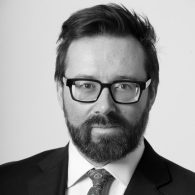
Andrew MacDowall

Andrew MacDowall is an independent journalist and analyst focusing on the Balkans. He has lived in Southeastern Europe for more than five years, writing about politics, economics and business in the region. He also has substantial experience in the Middle East and Southeast Asia as a writer, analyst and consultant. His website is www.andrewmacdowall.com and he tweets
as @andrewmacdowall.

Articles written by Andrew MacDowall

Romania Protests Bring Long-Brewing Anger to the Surface

By Andrew MacDowall 20 Jan 2012 | Briefing

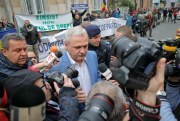
With anti-government protests in Romania moving into their second week, demonstrators are showing a persistence unusual for this part of the world, underscoring the importance they have placed in calling attention to their grievances. The woes that have brought Romanians to the streets are familiar to many in Eastern Europe, leading some to suggest that this is the European incarnation of the Arab Spring.

The European Project in the Balkans, Part II

By Andrew MacDowall 27 Oct 2011 | Briefing

With the global spotlight focused on the European Union’s ongoing debt crisis, the European Commission’s recently issued reports on the progress Western Balkan countries are making toward accession may seem marginal. But for these nations, the achievement of EU membership is an essential goal. As the reports indicate, this goal is still a long way off, even in the best-case scenarios.

The European Project in the Balkans, Part I

By Andrew MacDowall 26 Oct 2011 | Briefing

The European Union's recent progress reports on the Western Balkan countries mark the latest stage in a long process designed to bring a region devastated by post-Communist conflict into the European fold. The EU's influence on the Balkans has certainly been positive, drawing the countries away from conflict and toward reconciliation and reform. But progress has been patchy and inconsistent.

After Mladic, Obstacles Ahead for Serbia's EU Aspirations

By Andrew MacDowall 27 May 2011 | Briefing

The arrest of Ratko Mladic offers Europe some closure on a horrific period of its recent history, and is a substantial boost for Serbia and its president, Boris Tadic. But obstacles remain for Serbia on its long journey back to the European family. The first reactions to Mladic's capture have been of relief and satisfaction that he will at last be brought to justice. The air of finality, however, may be deceptive.

Kosovo: Going Rogue?

By Andrew MacDowall 07 Jan 2011 | Briefing

Just days after winning a plurality in the country's first post-independence general elections, Kosovo's Prime Minister Hashim Thaci was accused of a litany of gruesome offenses, while the December elections have themselves provoked controversy. Almost three years after its declaration of independence, backed by the U.S. and many of its allies, Kosovo is the object of increasing concern for the international community.

West Must Rethink Options Following Bosnia's Elections

By Andrew MacDowall 08 Oct 2010 | Briefing

SARAJEVO, Bosnia and Herzegovina -- Bosnia's elections on Sunday offered little reason to expect any normalization for the divided country in the near future. Ethnic Serbs re-elected leaders who have called for independence, while many Croats backed parties supporting further division along national lines. Despite a rise in support for moderate parties, these nationalists may impede reforms envisaged by the international community.

Serbia Moves Back to Center Stage

By Andrew MacDowall 19 Nov 2009 | World Politics Review

After years as a sidelined figure on the European political stage, Serbia is now attracting growing attention from both West and East. While continuing to line up its bid for European Union membership, Serbia is also the focus of Russia's renewed interest in the Balkans. For the time being, Serbia's canny government is strengthening its own position through what amounts to a balancing act.

Bulgaria's Ruling Coalition Feels the Chill

By Andrew MacDowall 06 Feb 2009 | World Politics Review

SOFIA, Bulgaria -- The gas is back on in Sofia, but Bulgarian Prime Minister Sergei Stanishev is still feeling the political chill. Increasingly out of favor in Brussels and frozen out by fair weather friends in Moscow, Stanishev's government also faced the wrath of street protestors in recent weeks. It was an inauspicious start to a year that could be crucial in reinvigorating the country's reform process and restoring relations with its European partners.