Articles written by Jon B. Alterman
It is not surprising that discussions with government officials from Gulf Cooperation Council countries often dwell heavily on
security threats. But perhaps the greatest security concern is one not of physical
security, but of human security. These nations can almost certainly survive the other threats they face.
But unless they can create dynamic, hard-working and creative
populations over the long term, they will fail.
more
For more than a half-century, diplomats in the Middle East have haggled over how to share the great river basins
that dot the region. But the rivers are not at the heart
of the story, because they are renewable. By contrast, the wells that feed much of the region's agriculture are a
finite resource, and they are being exploited far beyond their capacity
to restore themselves.
more
As much as a military effort, the war against al-Qaida has been a battle
for the hearts and minds of the Muslim world. Immediately after
the events of Sept. 11, 2001, it was not always clear how that battle
for Muslim hearts and minds would end up. But with the passage
of time, we now have a good idea. Al-Qaida has lost. And as a result, in
an important way, al-Qaida itself has been defeated. more
The United States is grappling with a plan of action as deterioration in Yemen continues. With wealthy GCC allies having shared interest in Yemen's success, the U.S. would do well to take a quiet leadership position, orchestrating funding and action from Yemen's neighbors instead of footing yet another bill in the name of global stability.
more
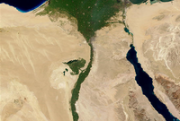
In a region that already has enough conflicts, another one is brewing,
and it comes from a surprising source: the Nile. The river that has
traversed history from the pharaohs through to the Bible and on to the
nationalist revolution of 1952 seems poised to enter a new phase. Only
this time, there may not be enough water to go around. more
It is a strange kind of republic in which presidents serve for life. It is an even stranger one in which rulers inherit power from their fathers. Yet, that is the direction in which the Arab Republic of Egypt is headed. For more than a decade, President Hosni Mubarak's son, Gamal, has been the only Egyptian for whom it was safe to harbor high political ambitions. more
China increasingly seems to be the odd man out in international efforts to
regulate the Iranian nuclear program. The French have taken a surprisingly hard line, and there are signs that Russia
may be stiffening its resolve as well. China, by contrast, seems
invariably to caution patience. Ironically, China's policy does not match its interests in the Gulf, which align almost wholly with those of the U.S.
more
The government of Iran struggled for decades to fit into the broader
Middle East, and it has finally succeeded: It now sees its people
principally as a source of instability rather than a source of
legitimacy. Thirty years after the Revolution, the Iranian government
has concluded that it is far better to anesthetize the population than
mobilize it. It is a conclusion from which there is no turning back. more
It is easy to be swept up by all of the images coming out of Iran and
think that the days of dictatorship -- in Iran and the rest of the
world -- are numbered. But the fact is that governments in the electronic age retain awesome
advantages over their nongovernmental opponents, and technology gives
them far more tools for managing restive populations than was the case
a generation ago.
more
For a part of the world that doesn't have a lot of freedom, the Middle East certainly has a lot of upcoming elections that matter. In much of the region, the results are a foregone
conclusion. Rulers elsewhere are not about to allow challengers, and
victory margins of 20, 40, or even 90 percent are commonplace. What makes these elections so interesting is that their outcomes
are truly unknown. more
More than three decades after U.S. and Egyptian presidents
together changed the landscape of the Arab-Israeli conflict, the
U.S.-Egyptian relationship has grown stale. Egyptians feel
unappreciated, and Americans feel that their aid has been taken
for granted. The way in which the relationship continues to disappoint expectations is corrosive. It must now be either reinvigorated or "right-sized." more
The U.S. government's map of the Middle East is changing. Long
dominated by the Arab-Israeli conflict, U.S. conceptions of the Middle
East are drifting eastward, increasingly centering in the Persian Gulf
and coming to envelop the mountains and plains of Afghanistan and
Pakistan. Seen this way, the U.S. purpose in the region far transcends
the need to resolve historical conflicts. more
To hear some people tell the story, anti-Americanism will end now
that Barack Obama has been elected president, bringing with him a
traditional American respect for foreign cultures, international law,
and multilateral diplomacy. The Bush legacy will fade from view, and
Americans will once again be beloved around the globe, especially in
Arab countries. The world, however, is not so simple. Its grievances will not disappear; indeed, they are unlikely to change much, despite Barack Obama's election victory. more
The Arab Gulf States and the United States are adopting
increasingly contradictory positions on Iran. Each side seems bent on
undermining the other, potentially leading to precisely the outcome
that each side is trying to prevent. There is wisdom in both approaches, but they are far more effective if applied in coordination than if pursued in competition. Not only are the stakes too high for the United States to get this wrong; they are too high for U.S. allies in the Gulf as well. more
China and its Asian neighbors have been the
beneficiaries of U.S. efforts to secure the Gulf and its rich oil
supplies. Critics charge that China has been content to be something less than a full partner on Gulf security. But it has often yielded to U.S. demands relating to the region. This is not a hopeless case. Cooperation between the United States and China in the Middle East up to now has been incremental. Now, it is in the
interests of both China and the United States that it become more
systematic. more
Irrational regimes have a way of self-destructing,
but hostile ones can linger on. The U.S. predilection is often to favor
the destruction of hostile ones in order to "fix" lingering problems.
If Iran is indeed a rational but hostile power, the United States
should be seeking to apply the lessons of the Cold War and developing
tools to manage Iran's actions. Such tools would almost certainly
involve more engagement than there has been in the last several years,
and building rather than severing ties between the two countries. more
It has become impossible to credibly argue that the Bush
Administration's Middle East policies have advanced U.S. national
interests. On every issue that the
administration has prioritized -- promoting Arab-Israeli peace,
liberating Lebanon from Syrian and Iranian influence, democratizing
Egypt, stabilizing Iraq, and containing Iran -- America's foes have
grown stronger and its allies have grown weaker. And virtually all of these problems are worsening as the administration prepares to leave office. more
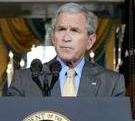
On Jan. 13 in Abu Dhabi, U.S. President George W. Bush delivered his third speech dedicated largely to freedom in the Middle East, which is three more than any previous U.S. president. But in his latest speech the president's
calculus had clearly changed. Not only was much of the urgency gone,
but the language was far more muted. Gone were references to "tyranny" and "oppression," and governments were characterized not as obstacles to freedom but as bulwarks against fanaticism.
more
The obituaries for political Islam have begun to be written. After
years of seemingly unstoppable growth, Islamic parties have begun to
stumble. It is too early to declare the death of political
Islam, as it was premature to proclaim the rebirth of liberalism in the
Arab world in 2003-04, but its prospects seem notably dimmer than they
did even a year ago. But while Islam has not provided a coherent theory
of governance, the salience of religion continues to grow among
many Muslims. more
Iraq's refugees tell heartbreaking accounts of suffering,
displacement, and shattered dreams, but these refugees represent more
than mere human interest stories. Collectively, the outpouring of
millions of Iraqi refugees into a very small number of neighboring
countries poses a dramatic security threat to the Middle East, and
there is no sign that threat is going away. The United States is
leading by example. It accepts just 70,000 refugees per year
worldwide, and only a small fraction have been from Iraq. more