
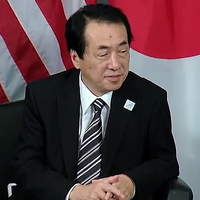
The triple catastrophe represented by Japan's March 11 earthquake, tsunami and nuclear emergency has thus far had two main effects on Japan's national security policies. First, the crisis has focused the attention of Japanese security managers inward toward domestic humanitarian assistance and disaster relief operations. Second, it has reinforced the Japanese-U.S. alliance, which had already been strengthened by the Japanese government's decision to abandon its earlier quest for a more independent security policy in light of increased external threats from the East Asian mainland. Given this increased salience of external threats, Japan's earthquake-induced domestic preoccupation may prove to be of short duration.
Japan has long faced threats from Russia, China and North Korea, but they have become more serious in recent years. Japan's territorial disputes with Russia and China over contested islands have been the focus of attention in the past year. The conflicting claims with Russia over the Northern Territories, which the Russians call the Southern Kuriles, are not an immediate security threat, as Japan lacks the military power to force Russia to relinquish the islands. But the dispute prevents Tokyo and Moscow from collaborating closely on regional security issues and impedes economic cooperation between their two complementary economies.
The dispute with the People's Republic of China (PRC) over the Senkaku Islands is perhaps the most prone to actual conflict, since in this case Japan occupies the islands, while the Chinese, who claim them as the Diaoyu Islands, have recently become more aggressive in exploiting their growing military capabilities to press the PRC's maritime territorial claims. Last year China curtailed exports of raw materials to Japan following the Japanese arrest in September of a Chinese fishing trawler captain who rammed several Japanese coast guard ships patrolling the waters around the islands. More generally, Japan has perhaps been the most uneasy among Asian nations regarding the growing economic and military power of the PRC.