
Great powers are sometimes molded by events as much as, if not more than, by grand strategy. In 1898, the United States -- at the time an isolationist and anti-colonial power -- entered onto the world stage after Spain allegedly sank the USS Maine in Havana Harbor. The commercial adventures of the East India Company compelled the British state to intervene in China, sparking the Opium Wars, while in 1850, the British foreign secretary, Lord Palmerston, ordered the British navy into the Aegean in order to protect a British subject, Don Pacifico, and reclaim his lost property. All were defining historical moments, even if they were identified as such only in retrospect. They demonstrate that the greater a rising power's economic interests in a foreign land and the more nationals it has involved there, the more likely it will feel compelled to act should events threaten either.
Libya might be such a defining moment for China. The veto-wielding Security Council member joined the international community this weekend in voting for a U.N. resolution that includes a travel ban; an asset freeze on Moammar Gadhafi and his family; and a referral of the situation to the International Criminal Court. All of this behavior is novel and unusual for China.
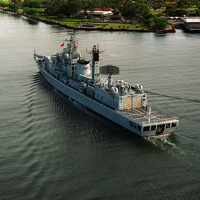
But recent events in Libya have made China bend its cherished principle of nonintervention, most pressingly by forcing it to launch its biggest-ever rescue mission of Chinese nationals. Some 35,000 Chinese citizens in Libya are in the process of being rescued, with the majority already out of the country. A Chinese frigate that was participating in anti-piracy operations in the Gulf of Aden has been deployed in the rescue efforts. Four Chinese military transport planes were also sent. When these planes lifted off from Xinjiang, it marked a new departure for China as a great power, symbolizing Beijing's realization that respect for national sovereignty sometimes has to be squared with pragmatic solutions to pressing problems.