
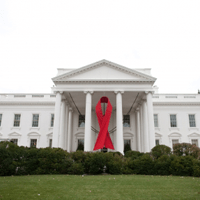
At the closing ceremonies of the International AIDS Conference in Vienna this year, U.S. President Barack Obama pledged to redouble U.S. efforts to fight HIV and AIDS through his Global Health Initiative, notwithstanding hard times in the wake of the global recession. Despite this verbal commitment, many AIDS activists were not satisfied and would later protest, particularly before the midterm U.S. congressional elections, that the U.S. was not spending enough on AIDS overseas.
A closer look at the Global Health Initiative budget reveals that these concerns may be justified. While AIDS funding has grown 4 percent from FY2010 to FY2011 -- from $5.5 billion to $5.7 billion -- this increase pales in comparison to previous years. From 2001 to 2010, for instance, U.S. funding for overseas AIDS programs increased on average by 21 percent per year, even including the increase of less than 1 percent from 2009 to 2010. At the same time, the funding gap for HIV/AIDS, estimated to be $7.7 billion in 2009, is growing. At the end of 2008, for instance, only 42 percent of those in low- and middle-income countries in need of antiretroviral drugs had access to them.
As Mead Over of the Center for Global Development recently commented, it is very unlikely that we can treat our way out of the HIV/AIDS epidemic. With current statistics showing that for every two people put on treatment, another five become infected, Over suggests a renewed focus on prevention. But regardless of the balance of prevention and treatment, HIV/AIDS still requires a significant level of resources.