
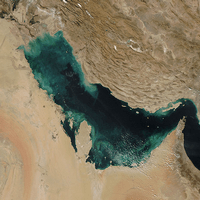
This weekend, Saudi Arabia will gather Gulf Cooperation Council (GCC) countries and other Middle Eastern states to collaborate on fighting the spread of weapons of mass destruction to terrorist organizations. The Saudi initiative reaffirms that regional cooperation is an emerging and powerful facet of international politics, and that regional organizations are a proven force against international security threats. This is not just hyperbole; there is ample evidence worldwide to back it up.
Regional teamwork is best illustrated by the progress made in Europe, where the European Union synchronizes policies and resources to combat security threats worldwide. The regional approach to transnational challenges is also well developed in Latin America. The Organization of American States is increasingly attempting to fight drug trafficking and small arms proliferation by seeking to coordinate judicial and enforcement systems across borders. Since the 1960s, the 10 countries in the Association of Southeast Asian Nations have engaged in regional coordination to achieve their top priority: economic development. The African continent works regionally through the African Union, deploying troops, peacekeeping missions and conflict-resolution teams to war-torn and unstable states such as Sudan and Somalia.
It is widely accepted today that neither individual states nor the U.N. alone can provide solutions to the world's many security and development problems. A regional approach is recognized as an important part of the answer, but this was not always the case. The founders of the United Nations largely shunned these institutions in the U.N. Charter. Back in 1945, providing wide-ranging, formalized influence to regional institutions was not in fashion. The concept of regionalism was in its infancy, and the havoc wreaked by World War II made world leaders eager to give the U.N. Security Council an executive role in world affairs.