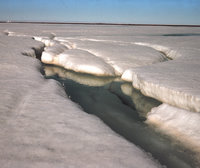
Over the past two years, the Arctic Circle has been the object of both exciting and alarming speculation. The planting of the Russian flag on the North Pole sea floor led to stories of a race to claim its resources. The opening of the fabled Northwest Passage and Russia's Northern Sea Route led to reports of shortened trade routes -- saving thousands of miles and many days at sea -- between Europe and the Far East. Government forecasts of large -- if as-yet undiscovered -- oil and gas reserves have given rise to concerns over sovereignty, security and sustainability throughout the region. Finally, the plight of the polar bear in an era of greatly reduced ice cover raised conservation concerns over protecting endangered species. The highlights of the past two years are in fact the result of changes over the past 30. Over that time, winter ice cover has declined by nearly 10 percent. Summertime observations in 2007 revealed the area of ice cover reduced by one third from its 1979-2000 average. These changes have raised hopes of economic development and concerns for the environment. In preparation for possible discoveries of resources on the sea floor, attention has first turned to securing recognition of jurisdictional claims in the Arctic seas, which in turn determine rights to mineral resources on the ocean floor. While it might appear as if recent Arctic activities are without precedent, most of the rules for resolving matters of jurisdiction and responsibility have been around for more than 25 years, in the form of the 1982 United Nations Convention on the Law of the Sea (UNCLOS). The convention is extensive in its determination of the rights and duties of states in all areas of the world's oceans. However, it is more a constitution than a body of law. In many cases there are ambiguities and gaps that must be resolved through additional international agreements or national action. Nevertheless, the convention ensures that, despite alarmist forecasts, Arctic disputes, when they arise, are likely to be matters of law and diplomacy rather than conflict or stalemate.
Russia and the Changing Geopolitics of the Arctic