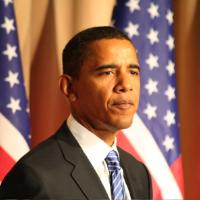
As far as foreign policy goes, Barack Obama comes to the presidency totally unburdened by his past (this is truly his first act in the international political theater) and unusually credentialed as a presumed agent of future change (e.g., his biracial background alone), so he's a relatively free agent, ideologically speaking. That's a huge asset as he follows the highly ideological Bush-Cheney administration, because he encounters a world of labeled players, most of whom are eager to come in from whatever "cold" standing vis-à-vis the United States that their current designation implies. That doesn't mean these regimes necessarily seek our affinity but merely the cessation of our efforts to isolate them from globalization's networks. With a global recession in the works, everybody wants access to consumption demand -- the real power in the system -- and America's still got more of that than anybody else. As America suffers its own inevitable bout of ideological bankruptcy, thanks to the subprime crisis, Obama is relatively free to reshape a host of America's bilateral and multilateral relationships around the world, where he's likely to find 50 percent taken off the top of most foreign leaders' past price for cooperation with Washington. Whatever names we called other regimes in the past, they're calling us plenty now, too. But such dynamics naturally abate during this political interregnum, so the longer the Obama administration goes without preemptively categorizing other regimes (this "league" or that), the more likely these governments are to submit for his consideration what could be a mutually acceptable new -- or renewed -- line of dialogue. Since this "Nixon" has no past, he's free to visit whatever "China" beckons, so long as the payoffs are reasonably apparent.
A Grand Strategy Agenda for the Next President