
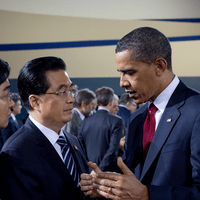
No credible international affairs specialist would contend that the 2012 presidential election will hinge on U.S. foreign policy, given the state of the U.S. economy and the widespread social anger that one sees bubbling up across the country. What's more, Americans -- if not Beltway partisan pundits -- have achieved a certain sense of consensus on foreign policy under President Barack Obama, whose leadership has displayed a palpable "give them what they want" dynamic that reflects his desire to keep overseas issues on the back burner while he focuses on domestic ones.
That last part should not be mistaken for coy condemnation. After all, U.S. foreign policy should reflect the will and sensibilities of the American people, from whom so much has been asked going all the way back to Dec. 7, 1941. America's seven-decade-long quest to recast the world in its image as an integrated global order -- in a word, globalization -- has been enormously successful. But it has also been enormously exhausting for us as a country, in addition to enabling all sorts of bad habits thanks to the dollar's role as global reserve currency. We have created this flat world, but we are no longer adequately prepared to compete in it, and that scares us, as it should.
We have just lived through an unprecedented global expansion that effectively bypassed our sacred middle class. Benjamin Friedman, in his masterful book, "The Moral Consequences of Economic Growth," explained why that matters: When incomes are rising and America's middle class feels confident about the future, this country truly is the "shining city on the hill." We welcome immigrants and present an open stance to the world on trade and investment. We progressively improve our laws and society. In foreign policy, we are entirely admirable in our pursuits and sensibilities, welcoming "rising" powers and seeking their inclusion.