
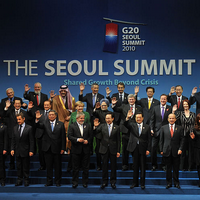
As the leaders from the 20 largest developed and emerging economies gather this week in Cannes, France, observers will catalogue the difficulties in forging consensus around decisive steps to remedy global ills. To be sure, a roomful of the world’s most powerful leaders are bound to disagree about the causes and consequences of global economic instability and the arc of global order. But this G-20 summit will highlight another central challenge to coordinated international action: the rise of democratic powers that are ambivalent about the prevailing international order and have yet to decide whether to bolster it, replace it or bypass it altogether.
Brazil, India, Indonesia and Turkey form the core of this group of global swing states. With them, the United States and its traditional partners can perpetuate a modified international order that protects fundamental economic and security interests. Without them, efforts to extend the rules-based international order -- and to manage global challenges through groupings like the G-20 -- are likely to falter.
Established after World War II and undergirded by American power, the web of rules, institutions and alliances that comprise the prevailing global order has been remarkably successful in extending security and prosperity -- not only to the United States and its allies, but also to countries like China. It has reduced the prospect for great-power war; opened markets to trade and investment; ensured the free flow of oil and the safe transport of goods; maintained monetary stability; and created rules and norms for the management of interstate relations. Despite countless failings, this global arrangement has helped drive a historically unprecedented increase in wealth, the longest period of great-power peace in modern times and an upwelling of democracy in areas where it had never previously existed.