
As part of a “big think” forecast project commissioned by an intelligence community sponsor, I’ve begun to think about the future geography of global security. As often with this kind of project, I find myself falling into list-making mode as I contemplate slides for the brief. So here are nine big structural issues that I think any such presentation must include
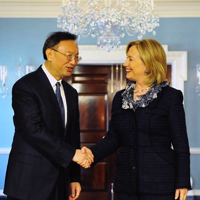
- Regional integration in East Asia depends on an American security presence. Virtually every country in East Asia is realistically planning for eventual absorption into a regional economic scheme structured around behemoth China, while quietly scheming to balance that increasingly lopsided dependency with solid security ties to the United States. Secretary of State Hillary Clinton’s recent article in Foreign Policy reaffirming America’s commitment to Asia highlights China’s conundrum: It cannot advance its economic domination of the region without accepting a U.S. security role. This is the security “tax” it pays for being a single-party state that none of its neighbors feels it can trust. Of course, a truly democratic China right now would probably be even scarier to its neighbors, so this tension will need to be finessed for probably another couple decades.
- The U.S.-China relationship will end up being about water. East Asia is decidedly short on water, which means its current dependency on foreign sources of food -- second only to the Middle East in sheer volume -- will grow dramatically as the region’s population and middle class cohort continues to swell. The Western Hemisphere has three times the water it needs on a per capita basis, which is why it collectively exports the vast majority of the world’s moveable feast in grains. The security quid pro quo here is obvious: China must accept America’s presence in East Asia, because it cannot afford to forego the Western Hemisphere’s food supplies.