
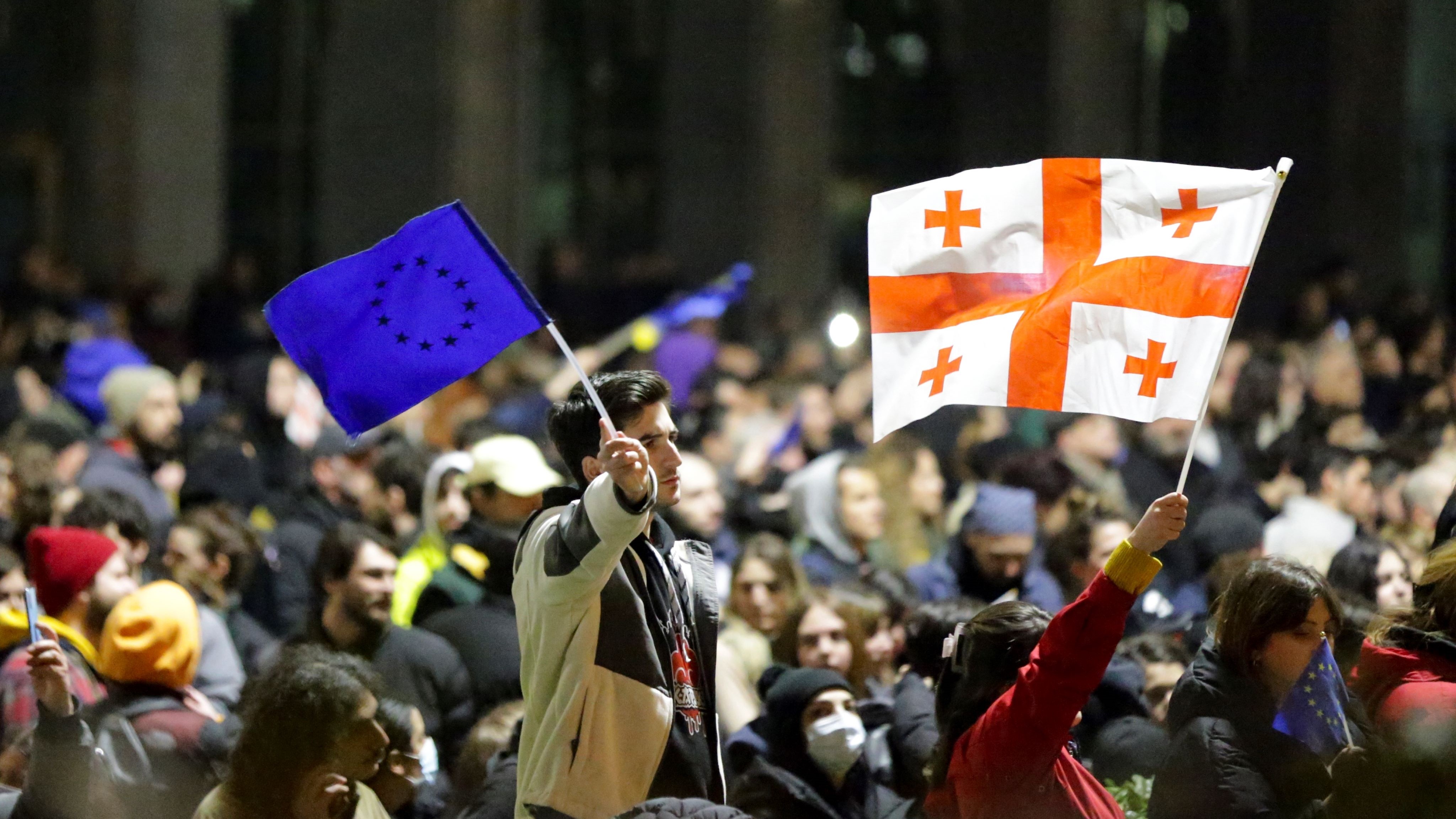
Last month, thousands of people took to the streets of Tbilisi, Georgia’s capital, to protest against a bill that would require nongovernmental organizations and media outlets that receive more than 20 percent of their annual revenue from overseas to register as “foreign agents.” The so-called foreign influence bill, proposed by the country’s ruling Georgian Dream party immediately drew outrage from domestic rights groups, who argued that it would restrict media freedom and jeopardize Georgia’s aspirations of joining the European Union.
After several days of violent, large-scale protests, Georgian legislators announced that they would withdraw the bill from further consideration. But the divisive issues raised by the proposed legislation will nevertheless remain salient and could further complicate Georgia’s efforts at European integration.
Just last March, Georgian Prime Minister Irakli Garibashvili submitted the country’s application for EU membership, against the backdrop of Russia’s invasion of Ukraine. In June, however, the EU stopped short of granting Tbilisi candidate status, acknowledging Georgia’s “European perspective,” but setting out a list of 12 key reforms it would first need to implement. Since then, Tbilisi has taken several steps to do so, including the procedures for choosing an ombudsman, though the EU and local NGOs have pushed for speeding up the process.