
Mali PM's Resignation Puts Junta Control Back in the Spotlight

Soldiers who carried out a coup in Mali earlier this year ousted Prime Minister Cheick Modibo Diarra on Tuesday, placing Diarra under house arrest and forcing his resignation. While the interim president has named a new prime minister, this abrupt change in leadership has drawn international attention to the military’s continuing grip on the country and called into question plans for an intervention to retake northern Mali from radical Islamists.
In an email interview, Paul Melly, an associate fellow in the Africa Program at Chatham House, told Trend Lines the ouster “undermines the constitutional legitimacy and political cover for intervention” and “sets back the process of securing a political green light” for retaking the north.
Despite fears that northern Mali has become a major stronghold for jihadi militias linked with al-Qaida, the military junta’s reassertion of power in the rest of the country means that the international community’s plans to assist the army in reclaiming the north are likely to be put on hold, Melly wrote. Neither the Economic Community of West African States, which had agreed to deploy troops to the country, nor Western governments “want to be viewed as coming to the aid of military putschists,” he explained.
John Campbell, Ralph Bunche senior fellow for Africa policy studies at the Council on Foreign Relations, said Diarra’s resignation will be a setback for establishing a credible government in the capital, Bamako. To move forward, Mali needs “a government that has credibility with all the various factions in Bamako and that might then be in a position to talk to those it can talk to in the north,” Cambpell said. The government needs to reach out to “those elements in the north that might be more moderate, that might be open to an approach from Bamako which would address longstanding northern grievances,” he added.
Though the soldiers who seized power in Mali earlier this year nominally relinquished control to Diarra, their resentment of the civilian government remained, Campbell said, adding that the prime minister’s ouster only underlines “where real power in Bamako lies.”
Campbell said the “the great unmentionable” in discussions of Mali is that the country’s civilian governments have not commanded enough popular support.
“In the West, not least in the United States, Mali was seen as a kind of democratic example, a place where democracy was working, and I think the military coup that overthrew the previous government, and now this episode, show that in fact civilian governments, either democratic or somewhat democratic, are in fact enjoying relatively little popular support,” he said. One reason for this, he continued, “is that the [precoup] Malian government, which was civilian and ostensibly democratic, was very much isolated from the people it ostensibly governed.”
As a result, he said, the Malian elections that were derailed by the coup, though “much vaunted” in the West, were merely “an exercise by which the elites of the country basically were rearranging the deck chairs on the Titanic.”
The iceberg in this case is northern Mali, Campbell said, because it was the government’s failure to adequately supply the military and its operations in northern Mali that precipitated the coup.
Melly wrote that while recent developments have undoubtedly slowed plans to assemble a peacekeeping force for the north, intervention plans will nonetheless remain on the agenda because of the potential for spillover.
The takeover of the north by jihadi rebels is “seen as an existential threat” by other West African governments, he explained, adding that it is also a serious security concern for Western governments, including France.
“The rapid appointment of a new civilian premier by transitional President Dioncounda Traoré should help to get over this latest problem -- provided that the new premier, Diango Cissoko, assembles a government that commands the support of a broad range of Malian political opinion and is not viewed as merely a puppet of the military,” he wrote.
But Campbell said he views intervention as “very difficult if not problematic.”
“It strikes me that the next step has to be some kind of political initiative, but to do a political initiative, you have to have a credible government in Bamako,” he said. “The military arresting the prime minister, in effect firing him when in theory they had no authority over him, does not generate a lot of credibility.”
“The lesson that I would try to draw from this is that Mali is a lot more complicated than good guys versus bad guys or al-Qaida franchisees against democrats,” Campbell concluded. “And essentially the mess in Mali is local. It has international consequences, but the mess is local.”
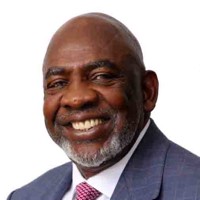
Photo: Former Malian Prime Minister Cheick Modibo Diarra (photo by Wikimedia user DwayneSamuels licensed under the Creative Commons Attribution-Share Alike 3.0 Unported license).
- U.S. Must Strike Difficult Balance on West Africa’s Terrorist Threat
- Ethiopia’s Dam Project Reflects Shifting Balance of Power in Nile Basin
- For EAC, Trade Still Out Ahead of Political Integration
- Diplomatic Fallout: A Summer of Political Storms Looms for U.N.
- Strategic Horizons: Don't Count on U.S. Security Partnership With Nigeria