Brian Finlay
Brian Finlay is a senior associate and director of the Managing Across Boundaries program at the Stimson Center.
Unlike the Cold War era, today’s global threat horizon is not defined by a single or a few large threats. Rather, our common security is challenged by a horizontal portfolio of problems that transcends borders, including everything from the trafficking of small arms and drugs to the smuggling of cigarettes. All of these scourges have a disproportionately negative impact upon developing economies. more
Thirty years of globalization has propelled widespread economic growth across Southeast Asia. Yet, these positive development trends are accompanied by a darker side of globalization, which threatens to undercut the remarkable gains of the past quarter-century. Preserving those gains at a time of global financial austerity will require dual-benefit development assistance and engagement with the private sector.
moreThe case for leveraging foreign assistance with a dual-benefit approach has never been stronger. Traditional security-related assistance can be tapped to help meet internal development goals and human security priorities while addressing counterterrorism and nonproliferation obligations. The net result is a sustainable relationship for governments working toward similar goals. more
The concept of linking responses to terrorism with development objectives in order to reduce radicalization is not new. For decades, international security analysts and governments made the case for enhanced cooperation, even while development specialists have warned against the "securitization" of development assistance. But to date, little has been done to practically link the two. more
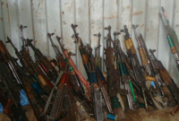
The impact of small arms and light weapons in East Africa goes far beyond their immediate capacity to kill and maim. Arms trafficking undermines all aspects of human security and diminishes prospects for economic development. With domestic and international funding increasingly scarce, it is essential to leverage existing sources of foreign assistance to address the problem. more
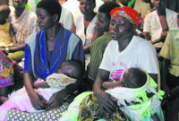
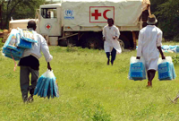
Urbanization and changing lifestyles in Africa, coupled with inadequate public health infrastructure, threaten to deepen a longstanding public health crisis. With OECD projections indicating significant reductions in traditional development assistance on the horizon, the international community needs to seize additional opportunities to reach beyond the standard sources of funding.
more
A toxic mix of development and security challenges is preventing East Africa from participating in the positive progress other parts of the world have been enjoying for decades. Opportunities exist to leverage existing sources of aid funding in ways that can bridge the gap in priorities between North and South, but they remain untapped because the discourse on better linking security with development remains vague. more
The United States isproposing to allocate $1.2 billion of military equipment and training over the next six years to combat al-Qaida in Yemen. In response, critics are calling for a more holistic approach. Presently lacking in this debate is the understanding that security and development are not mutually exclusive. Indeed, both interests can be advanced simultaneously using a dual-track approach.
more