Articles written by Balint Szlanko
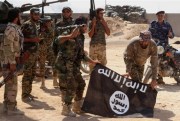
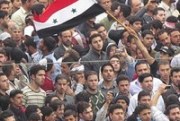
One feature sets the Syrian city of Raqqa apart from other towns captured by Syria’s rebels: The Syrian rebellion’s traditional flag -- green, white and black with three red stars, representing the moderate views of the original rebel movement -- is nowhere to be seen. Instead, a black flag bearing a verse from the Quran flies over Raqqa’s main square -- a flag often associated with Sunni Islamist extremists.
more
The fighting between Syrian Arab rebels and a Kurdish militia that broke out in November in the northeastern Syrian town of Ras al-Ayn threatens to open up a chasm beneath a rebellion already charged with sectarian and ethnic overtones. Ras al-Ayn now enjoys a shaky truce, but further fighting could add a new dimension to a war that is already pitting Syria's Sunni Muslims and Alawites against each other. more
With a 48-member council, a city manager and a criminal court, civic government is reasserting itself in Al Bab, a northern Syrian city of about 180,000 people, after rebel fighters pushed government forces out at the end of July. Al Bab is far from peaceful: Government jets bombard it almost every day, and up to two-thirds of the population has fled. But a measure of normalcy has been re-established. more
As the fighting intensifies between government forces and the Free Syrian Army for control of Aleppo, the rebels are consolidating their hold over territory elsewhere in northern Syria. The battle for Azaaz, an important city close to the Turkish border that fell to the FSA on July 19 after a month of heavy fighting, shows the rebels’ increased effectiveness in resisting government counterattacks. more
With the U.S. and its NATO allies looking ahead to 2014 as the date when they can declare the war in Afghanistan over, in the country’s troubled southeast, there is little evidence that President Barack Obama’s surge of troops has yielded significant results. In visits to two border provinces, Paktia and Khost, I found that, if anything, things had gotten worse since my last trip there a year ago. more
While the U.S. and its NATO allies still have some 140,000 troops in
Afghanistan, their strategy increasingly hinges on progressively getting
the Afghans to take over the fight, albeit with Western support. In the
country's deadliest provinces, in the south, that approach has not yet
borne fruit. But the slightly more secure -- if still challenging --
northern region offers a peek into the war's future.
more
The district of Gorbuz, in the south of Afghanistan's problematic Khost
province, lies in the path of a major infiltration route across the
Afghanistan-Pakistan border. To reduce the illicit trade in weapons and other materiel that are
streaming into the battle zones farther north, coalition forces are trying to widen the legitimate trade routes
connecting Afghan and Pakistani centers of commerce. more
BAGHLAN PROVINCE, Afghanistan -- The security situation in Baghlan, hitherto a relatively peaceful
province just north of Kabul, has been going downhill for about a year,
along with the rest of the north. Insurgent attacks on convoys along the
main north-south highway have
become commonplace, as have raids on police checkpoints. The shift reflects a lack of sufficient security forces, but also animosity to foreigners.
more
Balint Szlanko has been embedded with U.S. Marine units in Garmsir and Now Zad districts, Helmand province, Afghanistan, in January. Following a surge of American troops last year, both areas have recently been cleared of Taliban insurgents. With the onset of winter, fighting has for the moment given way to patrolling and busily interacting with the locals.
more
HELMAND PROVINCE, Afghanistan -- The northern bit of Garmsir district, known as the Snake's Head, has been
relatively stable for about a year -- unusual for the troubled province
of Helmand. But even more noteworthy is that
security in the area has
already been transferred to Afghan National Security Forces. NATO's strategy depends on the continued success of such turnovers.
more
HELMAND PROVINCE, Afghanistan -- Since 2006, Garmsir district in the southern-central part of Helmand -- Afghanistan's most war-torn province and home to a massive, opium-fed insurgency -- has been Taliban country. But that is changing, thanks to the recent influx of thousands
of U.S. Marines that allowed coalition forces to fight a proper counterinsurgency campaign here for the first time. more
WARDAK, Afghanistan -- They used to call Afghanistan "the forgotten war." They should rename it "the long war." Not only because it's been going on for eight years now, but because it's going to have to go on even longer if the West is to achieve even measured success in this broken country. For Afghans, that means living through more of the same. For the West, it means exercising patience it might not have. more
The 10th Mountain Division has recently deployed to Afghanistan's
Wardak province in an effort to apply counterinsurgency tactics to
the region 30 miles west of Kabul. Although security has improved, American and Coalition efforts still face significant
challenges. Balint Szlanko has been embedded with the 10th Mountain Division, and his photos document his experience on the ground, and in the air.
more
WARDAK, Afghanistan -- One of the biggest tests in Afghanistan is getting people to join the recently established Afghan Police Protection Force, an armed neighborhood watch that is being piloted in Wardak province, before it is extended to other parts of the country. The main problem is getting the Pashtuns, the dominant ethnic group of Afghanistan and the main support base of the Taliban, to join. more
WARDAK, Afghanistan -- The most frustrating part of this war is not the fighting. In fact, there isn't so much of that, besides the roadside bombs and the occasional mortar or rocket attack. The hardest bit is to convince the Afghans -- especially the Pashtuns, formerly the main backers of the Taliban regime -- that the coalition wants to offer its help, and can protect those that accept it. more
WARDAK, Afghanistan -- The small Afghan police and army outpost in this small district center looks like a war zone. The buildings are bullet-pocked and burnt, there is a burnt-out vehicle out front, and a rather nasty-looking machine-gun nest overlooks the road. The appearances don't lie: The center, originally built for civilian purposes, is a war zone. The good news is that security is improving. more
WARDAK, Afghanistan -- The new Afghanistan strategy is supposed to be all about winning hearts and minds. But despite the fact that overall violence levels in Wardak province have dropped since the U.S. Army's 10th Mountain Division started moving in earlier this year, this small combat outpost high in the Hindu Kush mountains seems to be mostly about fighting. more
WARDAK, Afghanistan -- The most surprising thing, initially, is how difficult and time-consuming even the most basic tasks are. I had left Forward Operating Base Airborne for a short trip to a nearby combat outpost, only a few miles away. The trip, which had promised to be relatively easy and painless, ended up consuming the entire morning, and was far more dangerous than I had expected for such a minor mission.
more