Roque Planas is a freelance journalist covering Latin American affairs whose work has appeared in Foreign Policy Magazine, the World Politics Review, and the New Internationalist. He is currently based in New York City, where he studies the future of U.S.-Cuban relations and the politics of race in Brazil as a Henry MacCracken Fellow in the Global Joint Master's program in Journalism and Latin American Studies at New York University.
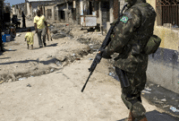
The South American organization UNASUR announced Friday that its members planned to begin pulling troops from the U.N. peacekeeping mission in Haiti, known by its acronym Minustah. "There's consensus for a gradual withdrawal of troops, consistent with Haiti's needs," Brazilian Defense Minister Celso Amorim told the press. While the announcement may mark the beginning of Minustah's withdrawal, the mission is far from over. more
Brazilian President Dilma Rousseff has had a rocky seven months in office. Having already shuffled her cabinet three times, twice due to corruption scandals, Rousseff is now facing a brewing controversy in the Tourism Ministry that has the potential to force a fourth cabinet change. One might expect the shaky start to undermine Rousseff's credibility, but so far she has managed to weather the storm. more
Last Thursday will be remembered as a low point for Chilean President Sebastián Piñera. Police clashed with students during an unauthorized protest, inviting unflattering, if exaggerated, comparisons to the military dictatorship of Augusto Pinochet. The same day, a poll found that Piñera's popularity had dropped to just 26 percent, the lowest level of any Chilean president since the return to democracy in 1990. more
Brazil has become both strong enough and confident enough to play an
active role on the world stage. But two of the country's leading foreign
policy architects say Brazil remains focused on the more pragmatic task
of cultivating relations with the developing world, which fuels Brazil's growing clout. In an increasingly multipolar world, Brazil is
emerging as a powerful voice representing the Global South. more
When a recent protest by Ecuador's police appeared to threaten the administration of Rafael
Correa with an untimely end, regional leaders quickly responded
by sending their representatives to UNASUR to Buenos Aires, where they condemned what they called a "coup attempt." The incident was the latest to boost the profile of UNASUR as the go-to group for
conflict mediation in the region. more
RIO DE JANEIRO -- Two years ago, former Brazilian President Fernando
Henrique Cardoso called for a shift in the country's drug policy, from policing to treatment. However, it appears that Brazil not only remains committed to
treating drugs as a problem for the police, it is also becoming the first country in Latin America whose drug use is pushing
it to adopt a more aggressive foreign policy towards its neighbors. more
RIO DE JANEIRO -- Secretary of State Hillary Clinton traveled to the
40th Organization of American States General Assembly meeting on Sunday
with two priorities, neither of which were published in the meeting's agenda. Clinton's program was designed to confront, without naming, the country that has
become the greatest challenge to the Obama administration in Latin
America -- Brazil. more
Chile has not voted a right-wing president into office since Jorge
Alessandri campaigned and won as an independent, center-right candidate
in March 1958. But Sebastián Piñera may well break that
precedent on Jan. 17. With the governing Concertación coalition facing divisions on the left, Piñera's centrism has found a friendly reception among an electorate looking for change. more
Chile's left-wing Concertación coalition might very well lose the
presidency for the first time since 1990, despite record-high approval ratings for outgoing President Michelle Bachelet. Bachelet will be remembered for her achievements, but she leaves office with several goals unfulfilled, making Concertación vulnerable. more
Venezuelan President Hugo Chávez's
rhetoric may be more provocative than those of other South American
leaders, but many of them clearly share his concern about an agreement
that could grant the United States military greater access to seven
Colombian bases. The polemical debate has pitted the majority of Latin
America against the U.S., damaging the Obama
administration's hopes for a regional partnership. more
BOGOTÁ, Colombia -- Colombian President Álvaro Uribe has once again demonstrated his skill at gaining access in
Washington. But recent events will compromise his ability to advance his
agenda in his meeting next week with President Obama. Colombia's continued human rights violations and an increasingly
complicated constitutional bid for re-election promise to undermine
Uribe's credibility. more
BUENOS AIRES, Argentina -- Argentina's four principle agricultural organizations declared a
six-day strike on Friday, Oct. 3. Facing the worst drought in a century
and fearful of the potential for contagion from the American financial
crisis, agricultural producers are demanding relief from the
government, principally in the form of a reduction in export taxes. President Cristina Fernández de Kirchner,though, shows no signs of bowing to pressure from the countryside. more
BUENOS AIRES, Argentina -- Last week, the Instituto Nacional de
Estadística y Censos, the Argentine government's statistics
agency, released the official inflation figure for the month of July:
0.4 percent. Such a report would have caused jubilation among the
Argentine public, had they believed it. But the
coordinators of the report appear to be the only ones who have
failed to notice the recent price increases in Buenos Aires, which have been exacerbated by the economic policies of President Cristina Kirchner. more