Jason Miks is a Tokyo-based writer, and editor of The Diplomat,
an online magazine focusing on the Asia-Pacific region. He is also managing editor of the Center for International Relations' Web site, International Affairs Forum. His work has appeared in the Christian Science Monitor, the Daily Yomiuri, the American Spectator and TCS Daily, among other publications. Prior to moving to Japan, he spent five years as a senior parliamentary researcher to the late Piara Khabra MP at the House of Commons in London.
TOKYO -- Asia may already have an alphabet soup of regional economic and
security arrangements, but Australian Prime Minister Kevin Rudd and Japanese Prime Minister Yukio Hatoyama seem
to believe there is room for at least a few more. Their proposals come at a time when regional trade agreements have been proliferating. But is there really a future for increased Asian integration? more
TOKYO -- The Dalai Lama was not the only influential figure looking for
an audience in Tokyo last month. His visit followed close on the heels
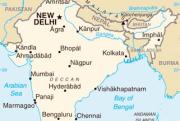
of current Indian National Security Adviser M. K. Narayanan, who met
with recently elected Japanese Prime Minister Yukio Hatoyama. Indeed, as tensions mount between India and China, some analysts see Japan as a natural ally for New Delhi.
TOKYO -- Since officially taking office two weeks ago, Japan's new prime minister,
Yukio Hatoyama, has increasingly signaled a break with the foreign
policy of the ousted Liberal Democratic Party. Although the U.S. has long called for an increasingly independent Japanese posture, Hatoyama's approach could mean the U.S. gets more than it bargained for. more
TOKYO -- The opposition Democratic Party of Japan on Sunday romped to a
landslide election win, bringing more than 50 years of almost
uninterrupted rule by the Liberal Democratic Party to a dramatic end. Yet despite the historic win, and
the apparent desire for change among Japanese voters that it reflects,
it is unclear how much of a difference the DPJ victory really heralds. more
TOKYO -- After more than half a century of virtually uninterrupted rule by the Liberal Democratic Party, Japanese voters look poised to opt for a change in the early general election now scheduled for Aug. 30. A victory by the opposition Democratic Party of Japan would leave open many
questions about the future direction of Japan's diplomacy and defense, questions
for which the DPJ's manifesto provides few answers. more
The biggest electoral show on earth is now under way in India. But
despite India's reputation as a growing power on the international
stage, foreign policy is set to play at most a marginal role in the decisions of most of
its estimated 714 million voters. With about 220 million still living below the poverty line, many Indians are understandably more
concerned about bread and butter issues. more
TOKYO -- Japan made it known that it hoped to take advantage of
any momentum in reforming the U.N Security Council to secure a seat as
a permanent member. The renewed attention to the issue comes after U.N. officials announced plans to press forward with
reform of the Security Council. Although currently a rotating member until the end of 2010, permanent status has proved elusive for Tokyo.more
TOKYO -- Despite having denied plans to drop its efforts to acquire the F-22 Raptor, the Japanese
government seems no closer to securing an order of the stealth fighter
in the face of an American export ban. The U.S. is said to be
wary of lifting the ban because of a well-publicized data leak
concerning the U.S.-developed Aegis defense system by a Japanese
officer in 2007. The approach has left some Japanese policymakers and
U.S. analysts frustrated.more
TOKYO -- The residents of Obama, Japan, might have celebrated
the election of their town's namesake as the next U.S. president, but many Japanese remain apprehensive about what the
change in leadership will mean for their country's most important ally.
The uncertainty about future relations is compounded by a fear that the U.S. might tilt toward China.more
TOKYO -- Last month the Indian Navy sunk what it believed to be a
Somali pirate "mother ship" off the coast of Somalia. The vessel turned
out to be a Thai trawler, but the intervention nevertheless highlighted
an increasing willingness among Asian nations to take a lead in
tackling the growing piracy problem that has garnered worldwide
attention and alarm. Notwithstanding the Indian misstep, the results so far are impressive. Asia's Malacca
Straits experienced just two attacks through September, compared with 70 in 2000.more
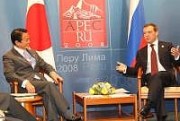
TOKYO -- At last week's Asia-Pacific Economic Cooperation summit, Japan and Russia had been expected to announce plans for
a visit by Russian Prime Minister Vladimir Putin to Japan by the end of
this year. But
the decision to instead postpone the visit until early next year is a
fair reflection of the state of political relations between the two
nations -- technically still at war -- in recent years. Despite the chilly political relationship, though, economic ties between the two countries have been booming.more
The U.S.-Indian civilian nuclear agreement may still have to
clear the U.S. Congress, but Indian firms and industry groups are
already celebrating the Nuclear Suppliers Group's decision this month that effectively gave the agreement a green light by waiving a ban on
the country engaging in nuclear trade. "The waiver will provide a number of benefits for Indian business
as well as the economy as a whole," said Hussain Rammal, a lecturer in
international business at the University of Adelaide.more
Having criticized his
predecessor as irresponsible for his similarly abrupt departure last
year, and after only just having announced an economic stimulus package that the ruling coalition hoped would win some votes, Japanese Prime Minister Yasuo Fukuda's abrupt departure still raised eyebrows. What it really ought to raise now, but still may not, is the prospect of a snap general election. The public might still be won over by an LDP that looks like it is finally putting the interests of the country ahead of itself.more
TOKYO -- Reports last week that Georgia was hit by a coordinated cyber
attack that compromised government Web sites offered a reminder of the
additional front governments must protect when diplomatic or military
hostilities break out between nations. It is with these kind of
attacks in mind -- and the prospect that such attacks could be used to
disrupt critical infrastructure -- that some Asian governments are beginning to examine more closely their countries' vulnerabilities to cyber attacks.more
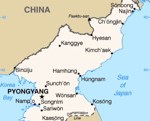
TOKYO -- A flurry of activity over the past two weeks suggests
the six-party talks aimed at ridding North Korea of its nuclear program
might finally be back on track. But despite this progress, Japan is concerned that the U.S. might
be moving too fast in removing North Korea from the terrorism sponsors
list and has pressed to ensure that the issue of Japanese abductees is resolved
first. Other observers have more general reservations about the limited scope of the current denuclearization agreement. more
China appears determined to capitalize on a thaw in its relations with Taiwan since Taiwanese President Ma Ying-jeou took office last month, and
has already invited Taiwanese officials to attend the first bilateral talks in a decade. The shift in atmosphere is in marked contrast to the tensions
evident under the eight-year rule of former Taiwanese President Chen
Shui-bian. However,
it is not just China that is likely to welcome a reduction in
cross-Straits tensions, but also one of Taiwan's closest allies: Japan. more
TOKYO -- Next week's scheduled visit to Japan by Chinese President Hu
Jintao is the latest evidence of a continuing thaw in the two
countries' relations. The
Japan-China relationship reached a low point in April 2005, when
thousands of Chinese protested Japan's approval
of textbooks that critics say played down Japanese aggression in World
War II. But an October 2006 visit to China by then-Japanese
Prime Minister Shinzo Abe marked the start of what the Chinese called an
"ice-melting." more
TOKYO -- As expected, at the meeting here of G-8 development
ministers earlier this month, rich countries reaffirmed their
commitment to tackling poverty in Africa and pledged to fulfill past
promises of aid to developing countries. Yet
for host nation Japan, the meeting came at an awkward time, coinciding
with the release of a report by the Organization for Economic
Co-operation and Development stating that Japan's net official
development assistance fell 30 percent in 2007 from
a year earlier.more
TOKYO -- With stock markets around the world in turmoil, a
rapidly appreciating currency, and
signs the Japanese economy is slowing, now hardly seems a propitious
time to have a vacancy at the head of the central bank of the world's
second largest economy. Yet Japan's main opposition Democratic Party of Japan apparently begs to differ. The situation is only the latest evidence that Japan's main opposition party is more interested in political opportunism than in offering an alternative governing vision. more
TOKYO -- Recent reports that Japanese lawmakers have been
discussing the feasibility of constructing a 200-kilometer tunnel
linking Japan with the Korean peninsula encapsulates as well as
anything the current optimism over relations between the two countries. New leadership in both countries is at the root of the new optimism. But analysts say that it will not be easy for both leaders to break free of domestic nationalist constraints to real progress toward an improved relationship. more