Lauren Gelfand is a
freelance journalist and analyst now based in Nairobi, with an interest
in security and defense issues. After beginning her career as a wire
service correspondent, working on three continents for Agence
France-Presse, she currently serves as Middle East and Africa editor
for Jane's Defence Weekly magazine. She writes in French and in English
for a variety of publications.
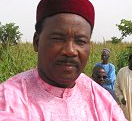
Mahamoudou Issoufou's victory in a peaceful and fair election fulfilled the hopes for a strong
democratic showing in Niger, which had flirted with chaos after a
military coup in February 2010. Niger's transformation from failed autocracy, to military junta, to a
hoped-for civilian-led democracy is a bright spot for troubled West
Africa. Now, however, the hard work begins for Issoufou's social democratic government. more
The ICC will rule on whether to issue summonses for six men accused of crimes against humanity for their alleged roles in violence following Kenya's 2007 presidential election. But in announcing the suspects' names, ICC Prosecutor Luis Moreno-Ocampo indicted the entire East African nation, saying that "we had to launch this because nothing was happening in Kenya." more
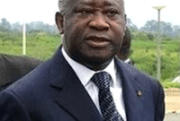
Côte d'Ivoire's President Laurent Gbagbo used a prescient campaign slogan in the run-up to the country's Nov. 28 presidential run-off election: "We win, or we win." Despite
regional and international recognition of Alassane Dramane Ouattara as
the winner of Côte d'Ivoire's Nov. 28 presidential run-off election, current President Laurent Gbagbo wrapped himself in the Ivorian tricolor
for an inauguration ceremony. more
NAIROBI, Kenya -- U.S. Ambassador to Kenya Michael Ranneberger, known for his blunt assessment of the country's government
and political elites, could find his ability to champion Kenyan reform efforts hamstrung,
after some 1,400 diplomatic cables originating from his office were
included by Wikileaks in the organization's latest release of
confidential U.S. government documents. more
After more than 26 years of autocratic rule, a
civilian was elected president in Guinea. But in an indication of the deep-seated animosity, fears and mistrust
that have led the nation to the brink of
disaster time and time again, the announcement that former Prime
Minister Alpha Condé won the second-round run-off election was
accompanied by ethnic riots, mass arrests and killings. more
To trace the deterioration of Côte d'Ivoire from 2002, when a civil war
pitted north against south, through Oct. 31, 2010, when ballots were
cast in a presidential election five years overdue, one only needs to
look at the dance trends that came and went during that time. The current craze consists of gliding movements and yawns, set to a
Zouglou beat and lyrics that proclaim, "On Est
Fatigué" ("We Are Tired"). more
In voting overwhelmingly to support a new constitution, Kenyans sent a clear message on Aug. 4 about the need for reform in a country brought nearly to its knees by corruption and bad governance. And in going to the polls peacefully and en masse, the more than 70 percent of eligible voters who cast
their ballots spoke volumes about the need to obviate the memory of
violent previous elections. more
A rally and prayer meeting for the campaign against Kenya's constitutional reforms turned deadly this week,
when at least six people were killed and
another 75 injured by a grenade attack. The images were a reminder of the dark days following Kenya's disputed
2007 elections, when more than 1,300 people died at the hands of police
and in ethnically motivated clashes. But this time, the battle
lines have been drawn differently. more
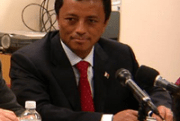
Popularly, Madagascar is known as an exotic and verdant island
populated by cheeky animated characters voiced by some of Hollywood's
biggest stars. But politically, it remains one of Africa's most volatile
countries. The latest installment in the Indian Ocean island's saga of
political exploitation would seem to combine the two, pitting a yogurt
salesman against a radio disc jockey in the battle for supremacy. more
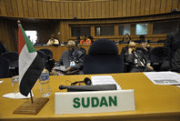
NAIROBI, Kenya -- The upcoming elections in Sudan will be the country's first multiparty ballot in 24
years, but for many in South Sudan, their outcome is a forgone conclusion and their fairness is
already in question. Flawed though they are, however, the national elections also represent a historic chance for suffrage, with many in the North and South using the campaign to openly voice
independent opinions. more
On the surface, Ethiopia is a stable, prospering nation, cultivating
strong relationships with the international donors who have for more
than a generation funded food, health and infrastructure projects for
the country's 85 million people. But according to some groups, beneath the surface is a regime that wields power with
impunity, repressing dissent, opposition and difference of opinion. more
Following a trend that has become depressingly familiar in West Africa
over the past 18 months, army officers seized power in Niger on Feb. 18,
removing President Mamadou Tandja from office. The coup ends a
political crisis that began last year, when Tandja used a popular
referendum to try to indefinitely prolong his term beyond its December
2009 limit. more
KAMPALA, Uganda -- Kampala is arguably one of the more beautiful capitals in
Africa. But the city's beauty not only belies the numbing poverty in
which most of Uganda's residents find themselves, it also masks the
country's ugly politics. Case in point: The outcome of Uganda's 2011 presidential
election is a foregone conclusion, and no one is likely to do anything
about it. more
When Nigerian President Umaru Yar'Adua left the country in
November 2009 to seek treatment for a heart ailment, few anticipated
that both he and Africa's most populous country would end up on life
support. The leadership crisis resulting from Yar'Adua's failure to
constitutionally hand over power to Vice President Goodluck Jonathan has had more than just
political implications for Nigeria. more
On Jan. 9, North and South Sudan marked the fifth anniversary of the
Comprehensive Peace Agreement that brought an end to Africa's longest
civil war. But as the two
sides proceed toward a referendum over Southern independence, long-simmering ethnic tensions
in the South are boiling into unrest. more
For regular watchers of "The Dadis Show" -- the television broadcasts
made by Guinea's self-promoting junta leader, Capt. Moussa Dadis
Camara, since taking power in a bloodless coup in December 2008 -- the
events of the last month have built into a cliffhanger. But whether it
will mark the series' season finale, or its last bow, remains to be
seen. more
In eastern Democratic Republic of Congo, the annual arrival of the holiday season brings with it the sinking realization that no matter the developments of the preceding 12 months, the end of the year will be accompanied by more violence, more sexual assault and more displacement of the civilian population. This year's tragedy is tinged peacekeeper blue. more
The United States and France have joined a chorus of disapproving African states to condemn recent events in Guinea, which have dimmed hopes that the resource-rich West African nation might finally achieve democratic
civilian. One voice that has opted against singing from the international hymn
book, however, is arguably Guinea's most important interlocutor: China.
NAIROBI, Kenya -- Kenya's "window of opportunity to deliver reform is
rapidly closing," former U.N. Secretary General Kofi Annan warned at the end of his latest visit to Nairobi. Though delivered in his characteristic velvet
tones, Annan's message was firm: Accelerate the reform agenda, or risk the potential of an irretrievable decline into
crisis, with economic as well as political consequences. more
LONDON -- From the air, eastern Democratic Republic of Congo
looks like paradise on earth. But on the ground, the
grim reality of one of the world's most volatile and perennially
ignored regions shocks, with its morass of frightened civilians,
bellicose and well-armed fighters and an intractable conflict that
threatens to boil over again into war. If that occurs, it will boost an
already tragically bloody decade's death toll, estimated at more than
four million people, vastly higher.more