
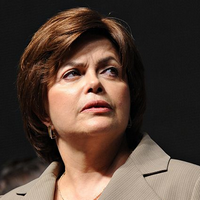
When Brazil tried to join the ranks of the world's diplomatic heavyweights, it did so loudly. In an attempt last year to convince the U.N. Security Council not to impose a third round of sanctions on Iran for refusing to freeze its uranium enrichment program, Brazil teamed up with Turkey to negotiate a nuclear fuel swap deal with Tehran. The maneuver failed: The council, under pressure from the U.S., U.K. and France, disregarded the agreement and went ahead with sanctions. It is perhaps no surprise, then, that when Dilma Rousseff took over as president of Brazil in January, she distanced her administration from Iran and warmed to the United States.
Nevertheless, despite the outcome of the mediation effort, Brazil's audacity had a lasting effect. "Brazil can no longer be accused of having too low a profile in world affairs," said former Foreign Minister Celso Amorim on May 16, at a talk hosted by the Americas Society. Now, Amorim says, "Brazil is accused of punching above its weight."
Brazil has become both strong enough and confident enough to play an active role on the world stage. But two of the country's leading foreign policy architects say Brazil remains focused on the more pragmatic task of cultivating relations with the developing world, particularly Latin America and Africa. That strategy, in turn, fuels Brazil's growing international clout. In an increasingly multipolar world, Brazil is emerging as a powerful voice representing the Global South in multilateral forums like the G-20, the World Trade Organization and discussions over greenhouse gas emissions.