After Saddam, a Sunni-Shiite Thirty Years' War?

By Iason Athanasiadis, on , Briefing

TEHRAN, Iran -- A bravura performance by former Iraqi dictator Saddam Hussein at his own hanging has transformed him into a martyr in the eyes of secular and religious Sunni Muslim nationalists throughout the Arab World and may have sharpened Sunni-Shiite tensions beyond the point of no return.

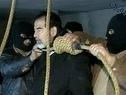
Defiant to the end, Saddam stood with a noose around his neck and expended his last words condemning America and Iran. It was a skillful manipulation of many Arabs' fears that -- with Arab nationalist strongman Saddam gone -- a resurgent Iran will dislodge traditional regional powers such as Saudi Arabia and Egypt and entrench a Shiite axis from Kabul to the Mediterranean. Iran maintains close ties with friendly governments in Baghdad and Damascus and militant groups such as Lebanon's Hezbollah, Palestinian Hamas and the Shiite Hazara minority in Afghanistan that are rapidly ascending the political ladder in their countries.

Saddam's execution on the dawn of the holiest day in the Muslim calendar electrified the Arab World. In Libya, quixotic leader Moammar Qaddhafi cancelled all official celebrations and declared three days of official mourning. As with many of his declarations, his main thrust was rhetorical and Libyan television continued its festive coverage on the day. Elsewhere, conservative Arab leaders of majority Sunni states, such as Egypt's Hosni Mubarak, Jordan's King Abdullah and Saudi Arabia's King Abdullah, maintained an uneasy silence. At a time when their people seethe with anger over the close alliances they maintain with Washington, tension with Iran offers them a convenient diversion and a common enemy.

King Abdullah II of Jordan warned of an Iranian-inspired "Shiite axis" as far back as 2005. Mubarak provoked a political storm last May when he warned in a television interview that "the Shiites are always loyal to Iran . . . and not to the countries in which they live." Saudi Arabia's political echelons are currently riven by the debate over what kind of aid to offer Sunni groups in Iraq battling Shiite militias.

"Down with the traitors, the Americans, the spies and the Persians," said Saddam as a noose was tightened around his neck by his Shiite executioners. His substitution of Iran for Israel, the traditional bogeyman in Arab anti-Western rhetoric, was an agenda-setter for Sunni groups in Iraq and elsewhere. Iraq's Sunnis have felt threatened by Iraq since the overthrow of Saddam Hussein, which ended four hundred years of Sunni leadership of the area known today as Iraq.

Just as the ancient Greeks ceased all warfare and declared an Olympic truce for the duration of the quadrennial Games in Olympia, so do Muslims desist from fighting during the Hajj period in order that pilgrims can safely march to Mecca. As news spread of the killing of Saddam on the dawn of the holiest day in the Muslim calendar, the Arab satellite networks veritably hummed with outraged commentators fingering the execution as another example of Shiite blood-settling and evidence that an international conspiracy was afoot to rob Iraq of its Arab character. On Al-Jazeera, the spokesman of the Mecca-based Council of Sunni Clerics declared that the Shiites had chosen on purpose the Sunni 'aid al-qorban (which occurs one day before the Shiite holy day) to carry out the execution. An Arab nationalist commentator warned of the "Safavid menace," referring to the 16th century Iranian dynasty that established Iran as a Shiite state.

Because the Iraqi constitution prohibits executions from being carried out on eid, Shiite Prime Minister Nour al-Maliki's government had to officially declare that the holiday did not begin until 31 December, the day the Shiites celebrate it and one day after the Sunnis. Middle East specialist Nir Rosen points out that this was tantamount to a declaration "that Iraq is now a Shia state."

"This foolish act will feed hatred to everything the U.S. represents," said Saleh al-Khatlan, head of the political science department of King Saudi university in Riyadh. "I am afraid that it will be a cause for a new wave of anti-American mobilization and will, in the long run, justify violent acts possible on the scale of the 9/11 attacks."

In Tehran, the news of Saddam's death was received with joy, but ordinary Iranians did not immediately comprehend the great anger that the execution had caused throughout the Sunni Muslim world. The conservative Kayhan daily trumpeted the headline: "Saddam went to hell, now the world awaits Bush's turn." On state radio, morning talk-show hosts pleasantly twittered about the good news. There seemingly was very little public awareness of the massive amount of anti-Iranian Arab ill will that the action generated and no reporting by the media of the triumphalist Shiite rhetoric mouthed by Saddam's executioners as he was being led to his death. On Jan. 2, Al-Jazeera reported that the Maliki government -- clearly shaken from the scale of the backlash -- had ordered an investigation into the release of the execution film.

"Shiite chants, taunts of 'go to hell' and the general atmosphere of gloating and revenge dominated the proceedings," said Ahmad Sadri, a professor of sociology at Lake Forest College. "That would have been disturbing at any rate. The image of the trap door opening under Saddam while he is reciting his last rites will not do wonders for the sectarian war in Iraq.

Unwittingly or consciously, the United States has committed another massive gaffe in Iraq. In the mid-decades of the 20th century, imperial power Britain wielded a policy of "divide and conquer" to keep its dominions under control. In Egypt, the Christian minority Copts were encouraged to enlist in the police, earning the hostility of their Sunni Muslim fellow citizens. In Cyprus, the Greek and Turkish Cypriot communities were encouraged into an antagonistic relationship by Britain's occupation bureaucracy. In 21st century Iraq, ordinary people are outraged at the manner in which the United States has insisted on viewing society through the filter of Sunni, Shiite and Kurdish sections, delineating divisions that were dormant.

"One might well be forgiven for surmising that the current thrust of U.S. policy in the Middle East and throughout the Muslim world is to exacerbate and instrumentalize Sunni-Shia divisions," said Fred Reed, a specialist on Middle East politics and author of "Shattered Images: The Rise of Militant Iconoclasm in Syria."

With Arab anti-Iranian rhetoric having reached a pitch unprecedented since the end of the eight-year Iran-Iraq War in the 1980s, evidence is mounting that a new Arab-Persian confrontation is unfolding across the region. From Lebanon to Palestine, Iraq and Afghanistan, to far-flung conflicts such as Somalia and Sudan, a desperate struggle for influence is under way.

In Sudan, the least highlighted theater of this struggle, Sunni groups Ansar al-Sunna al-Muhammadiyyah and Majles al-Dawa in December expressed fears of Iranian-backed plans to spread Shia beliefs in the country and demanded the closure of three Iranian cultural centers. For their part, Iranian diplomats are concerned by what they call U.S. attempts to use an upcoming referendum on south Sudan by its majority Christian inhabitants to create a pro-U.S. Christian secessionist state in the fault-line between Muslim and Christian East Africa.

"[Saddam's] execution reinforces the widespread perception that under the neocons the U.S. is truly waging a war against Islam," said al-Khatlan. "They had a whole month to carry out the execution but chose the first day of eid to carry out the execution, as people were getting ready to sacrifice. The message is very clear: it is your religion we have a problem with. This is how Muslims feel today."

With emotions dangerously sharpened and Washington flailing for a strategy that will shift attention away from its role even while maintaining its influence in the region, violence will inexorably spread. Some Iranian academics and former officials are already describing this conflict as another Thirty Years War that will eventually lead the region to a Muslim version of the Treaty of Westphalia and the modern era. It was the 1648 Peace of Westphalia that finally buried the hatchet between Catholics and Protestants in Europe and brought into being sovereign nation states and the modern international system.

The Westphalian system allowed each state to define its religion. In the process, it created a segregated, sect-cleansed Europe. Such an apocalyptic scenario might eventually make lasting Middle Eastern peace possible, but it would also imply that, in a region that gifted the world its three major monotheistic religions, Muslims had found untenable even the uneasy coexistence that characterized the first fourteen centuries of Islam.

Iason Athanasiadis is a Tehran-based analyst and writer.