
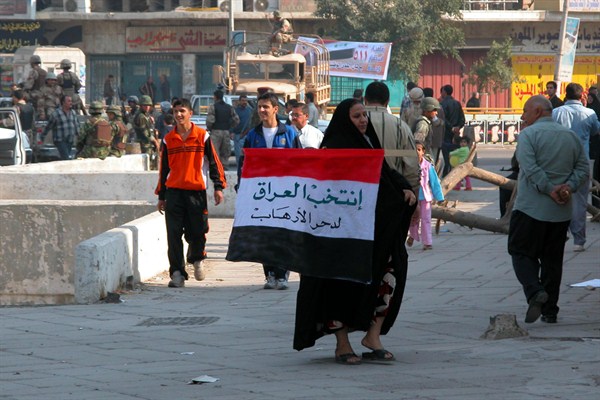
The Iraq War will surely stand as the greatest of foreign policy mistakes -- a failure, and a tragic one, as no shortage of commentators have called it. What makes it more tragic is that it needn't have been so. Whether or not one was firmly against the war from the start, the verdict on Iraq will ultimately be characterized by an unusual mix of anger, ambivalence, and, perhaps most of all, confusion.
From the beginning, Iraq wasn't just about a war. It raised a series of questions that many of us still have trouble answering. If the war was morally wrong, was it because of its consequences, or despite them? Is what makes such wars immoral the fact that they are preemptive, or is it rather that preemption, from an empirical standpoint, fails more often than it succeeds? Is there something intrinsically wrong with using force in the service of what we claim are universal ideas and ideals?
The answers to these questions are not necessarily any more clear today than they were several years ago, during the fevered, rushed, run up to a war that, at the time, remained very much an abstraction. What if Iraq had succeeded? This is a counterfactual, so there is probably little use in answering it. But there is a different question worth asking, in part because one day we will likely be forced to answer it: What if Iraq succeeds?