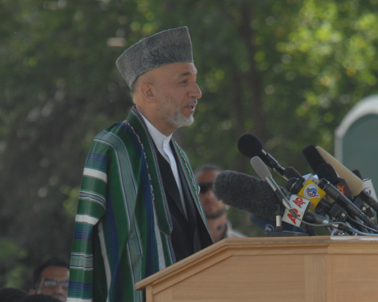
One of the major objectives of President Bush's trip to Europe last week was to secure additional international support for the war in Afghanistan. Although European governments generally reaffirmed -- and in several cases announced slight increases in -- their military and economic commitments to the beleaguered Afghan government of Hamid Karzai, which remains entangled in a protracted insurgency with the Taliban, their declared level of support appears to fall short of that needed to allow the Afghan government to consolidate its control of the country. The members of the International Security Assistance Force (ISAF) continue to reaffirm their commitment to the stabilization mission in Afghanistan while quarreling over how to share its burdens. ISAF currently has over 52,000 personnel, from 40 nations, including all 26 NATO countries. An additional 19,000 American troops serve under a separate U.S. command, while the Afghan Army currently numbers about 50,000 moderately capable troops. Even so, ISAF commanders continue to complain about shortages in key mission areas as well as about the limitations ("caveats") that the national governments impose on where their troop contingents can serve and under what conditions. NATO has formally been in charge of ISAF military operations since 2006. Despite repeated pleas by NATO's political and military leaders, many national governments refuse to allow their personnel to operate in the most dangerous parts of Afghanistan, except in an emergency. Often these restrictions reflect the domestic political conditions in the troop-supplying country, where parliaments stipulate conditions before authorizing the deployments. Whatever their cause, the inadequate troop levels, excessive restraints on their employment, and recurring attempts at buck passing rather than genuine burden sharing have weakened NATO's credentials as Eurasia's most effective international security alliance.
Bush Europe Trip Yields Mixed Results on Afghan War Front