
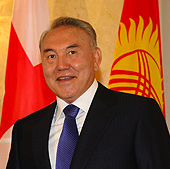
AKTAU, Kazakhstan -- Last week, Kazakh President Nursultan Nazarbayev traveled to Germany for the signing of $4 billion worth of economic agreements, exchanging access to Kazakhstan’s stores of rare earths and raw minerals for German technological expertise. Appearing alongside German Chancellor Angela Merkel, Nazarbayev struck a confident figure in deflecting criticisms of the country’s democratic performance. After two decades of independence, Kazakhstan appears to have won its place on the world stage.
Going solely by the numbers, Nazarbayev has reason to be confident. Once considered yet another impoverished Central Asian post-Soviet republic, Kazakhstan’s per capita GDP now stands at more than $13,000. Parts of Almaty, the former capital and still the country’s cultural heart, more closely resemble Vienna than nearby Bishkek, both in the quality of services and the prices found there. Building off vast reserves of oil, natural gas, coal and minerals, Kazakhstan has distanced itself from the rest of Central Asia by being more open to investment than Uzbekistan and Turkmenistan and more functional than impoverished Tajikistan and Kyrgyzstan.
But recently the Kazakh model has started to show cracks. On Dec. 16, a long-ignored strike in the western oil town of Zhanaozen turned violent when workers clashed with police at an Independence Day celebration. After police fled the town’s main square, a crowd rampaged through the city, burning the local mayor’s building and oil company offices, and looting stores and ATMs. After regrouping, police moved back in with live fire, killing at least 14 by official count, and many more according to some independent and opposition reports. Amateur video posted on YouTube showed police firing automatic weapons at fleeing protesters and beating those who fell.