
Kim Jong Il’s death and apparent replacement by his 20-something son, Kim Jong Un, has introduced a potentially potent new variable into South Korean politics at a time when the South’s traditional political parties are dissolving. This vulnerability may tempt the North to engage in aggressive provocation, while making it difficult for the South to respond cohesively.
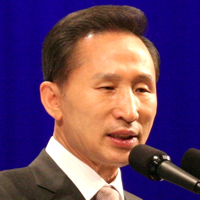
For the time being, both capitals are likely to maintain the status quo. South Korea’s policy toward the North is set by its executive, composed of South Korean President Lee Myung-bak and Prime Minister Kim Hwang-sik. Though the South Korean media often refers to Lee as a “lame duck” president, he is still in charge and is unlikely to make any changes to how the North is dealt with. His first decision in this new era was whether or not to offer condolences on Kim Jong Il’s passing. He decided not to send official condolences to the regime, though he did make a statement of sympathy to the North Korean people.
Short-term continuity with current policies can be expected in the North as well. While the official face of North Korea has changed, its ideological underpinnings remain intact. “I expect no substantive changes at all in North Korean approaches to South Korea,” noted Hyung-Gu Lynn, professor at the Institute of Asian Research at the University of British Columbia and editor of Pacific Affairs, an academic journal on contemporary Asia.